The Five Phases of B2B Growth
A Systematic Framework for Building Sustainable Revenue Infrastructure
Preface
This document constitutes the foundational doctrine of B2B Growth Systems. It establishes the sequential framework through which all business-to-business companies must progress to achieve sustainable growth. The four subsequent doctrines—Product-Market Fit, Lead Generation, Demand Generation, and Scaling with Paid Media—expand upon the phases introduced here.
The methodology presented is not theoretical.
It derives from eighteen years of direct practice across more than thirty companies, spanning software development, consulting, technology distribution, healthcare recruitment, and professional services.
Every principle has been validated through implementation. Every framework has been refined through failure and success.This doctrine is written for universal application. Whether the reader is a founder building a first company, an executive scaling an established enterprise, a student preparing for commercial practice, or a scholar examining growth methodology, the principles that follow apply without modification.
The Fundamental Problem
Every business-to-business company, regardless of what it sells or to whom, must solve the same fundamental problem: how to reliably convert strangers into customers.
This statement appears simple. Its implications are not.
The problem contains multiple embedded challenges.
First, the company must identify which strangers possess both the problem it solves and the resources to pay for a solution.
Second, it must reach those strangers with a message that captures attention amidst competing demands.
Third, it must educate those strangers sufficiently that they understand the problem, recognise the solution, and believe the company capable of delivering it.
Fourth, it must guide those strangers through a decision process that may involve multiple stakeholders, extended timelines, and significant risk aversion.
Fifth, it must do all of this repeatedly, predictably, and profitably.
Most companies approach this problem tactically. They hire salespeople. They engage marketing agencies. They purchase advertising. They attend conferences. They produce content. They implement customer relationship management systems.
Each tactic addresses a fragment of the problem. None addresses the whole.
The result is familiar: sporadic success punctuated by frustrating failure. One month produces abundant opportunities; the next produces silence.
One campaign generates qualified leads; the next generates nothing but expense.
The founder or executive finds themselves trapped in perpetual uncertainty, unable to predict revenue with confidence, unable to scale without proportional increases in effort and cost.
This pattern persists because tactics without systems produce inconsistent results. A system is a set of interconnected components working together toward a defined outcome. Tactics are individual actions that may or may not contribute to that outcome. The difference is architectural.
Consider an analogy.
A person may exercise sporadically—a run here, a weight session there—and achieve modest fitness improvements.
But sustainable physical transformation requires a system: structured programming, progressive overload, nutritional protocols, recovery practices, and measurement mechanisms working in concert. The sporadic exerciser and the systematic trainer may perform identical individual activities on any given day. Over time, their outcomes diverge dramatically.
The same principle governs business growth.
Companies that build systems achieve predictable, scalable results.
Companies that execute tactics achieve unpredictable, unscalable results.
This doctrine provides the blueprint for the former.
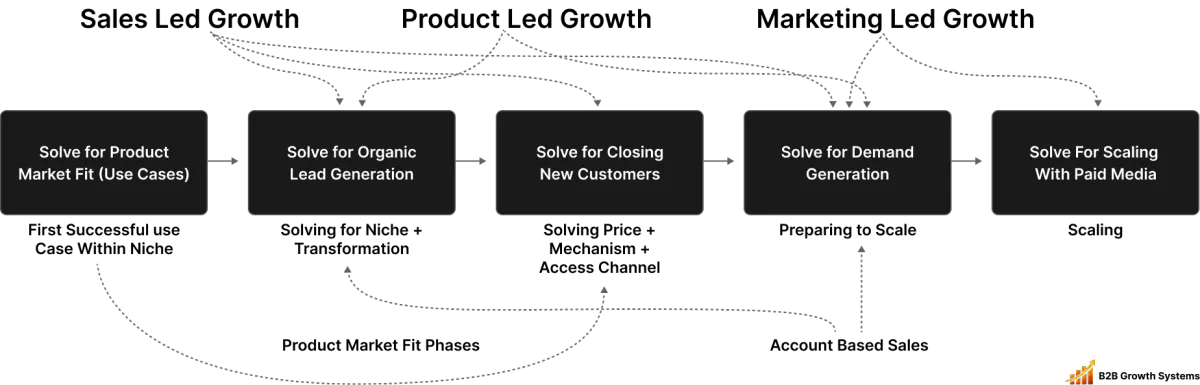
Figure 1.1: The Five Phases of B2B Growth. This model, developed by James Carby-Robinson, illustrates the sequential progression required for sustainable business-to-business growth. Each phase creates the preconditions for the next. Attempting to execute a later phase before completing an earlier one is the primary cause of wasted resources and stalled growth.
The Five Phases: An Overview
The framework presented in Figure 1.1 identifies five distinct phases through which every B2B company must progress:
Phase I: Product-Market Fit Validating that the offer solves a genuine problem for a defined market willing to pay at a price that sustains the business.
Phase II: Lead Generation Building systematic mechanisms that convert cold prospects into qualified leads through direct outreach.
Phase III: Closing New Customers Developing sales processes, scripts, and conversion mechanisms that transform leads into paying customers.
Phase IV: Demand Generation Creating content, positioning, and market presence that attracts buyers throughout their journey without requiring direct outreach.
Phase V: Scaling with Paid Media Amplifying validated systems through paid advertising channels to accelerate growth beyond organic limitations.
The sequence is not arbitrary. Each phase produces outputs that become inputs for subsequent phases. Attempting to skip phases or execute them out of order generates predictable failure modes that this doctrine will examine in detail.
Phase I: Product-Market Fit
Product-market fit is the condition in which a product or service effectively addresses the underserved needs of a defined market in a manner that sustains growth and profitability.
This definition contains three essential components, each of which must be present simultaneously.
Component One: Effective Address
The solution must actually solve the problem it claims to solve. This requirement appears obvious but fails more frequently than any other.
Founders often build products that address problems as they imagine them rather than as customers experience them.
The result is a solution in search of a problem—technically functional but commercially irrelevant.
Component Two: Underserved Needs
The market must contain unmet demand. If existing solutions adequately address the problem, no opportunity exists regardless of how elegant the new solution may be.
Alternatively, if the problem is not sufficiently painful, the market will not prioritise solving it. The need must be both genuine and inadequately served.
Component Three: Sustainable Economics
The price the market will pay must exceed the cost of delivering the solution by a margin sufficient to fund continued operation and growth.
A product that customers love but cannot profitably deliver is not a business; it is a hobby subsidised by investor capital or founder savings.
Product-market fit is not a binary achievement. It exists on a spectrum, and it requires continuous validation. Markets shift. Competitors emerge. Customer expectations evolve.
A company that achieved product-market fit three years ago may have lost it today without recognising the change.
The doctrine on Product-Market Fit presents a systematic framework—the N-T-P-M-A model—for validating and maintaining this condition.
It introduces the Customer Development Model as the methodology for achieving fit before committing substantial resources to growth activities.
The Critical Insight
No amount of sales excellence or marketing sophistication can compensate for absent product-market fit. Investing in lead generation before confirming product-market fit is equivalent to pouring water into a bucket with no bottom. The effort produces activity without accumulation.
This is why Phase I must precede all others. The validation work may feel slow. The urge to "start selling" may feel urgent.
Discipline requires resisting this urge until the foundation is confirmed.
Phase II: Lead Generation
Lead generation is the discipline of converting strangers into prospects and prospects into leads. Understanding this phase requires precise terminology, as the industry has confused these terms for decades.
Definitions
A prospect is a potential customer who fits the defined criteria for the ideal buyer but has not yet demonstrated interest in the offer. The term derives from gold mining, where prospectors searched riverbeds for valuable deposits. In commercial practice, prospecting involves searching through a defined population to identify those who may become customers.
A lead is a prospect who has demonstrated genuine interest in the product or service. The demonstration may take various forms: responding to outreach, requesting information, engaging with content, or explicitly expressing intent to evaluate the solution.
The distinction matters because the two groups require different treatment. Prospects require outreach—proactive contact designed to generate awareness and interest. Leads require qualification and nurturing—responsive engagement designed to advance them toward purchase.
The Lead Generation System
Systematic lead generation comprises several interconnected components:
Target Definition: Precise specification of the ideal customer profile, including firmographic characteristics (industry, size, geography), demographic characteristics (role, seniority, function), and psychographic characteristics (challenges, priorities, buying behaviour).
List Building: Compilation of prospects matching the target definition using data sources, research, and qualification processes.
Message Development: Creation of outreach content calibrated to the prospect's likely position in their buyer journey, addressing their specific challenges and presenting relevant solutions.
Channel Execution: Deployment of outreach through appropriate channels—email, LinkedIn, telephone, or others—based on where target prospects are reachable and receptive.
Response Management: Systems for capturing, categorising, and advancing responses from prospects who demonstrate interest.
Measurement and Optimisation: Tracking of key metrics—connection rates, response rates, lead rates, with systematic refinement based on results.
The doctrine on Lead Generation presents this system in comprehensive detail, including the 4P Approach (Pinpoint, Present, Process, Parse) and the Exposure Lead Rate metric for measuring message-market resonance.
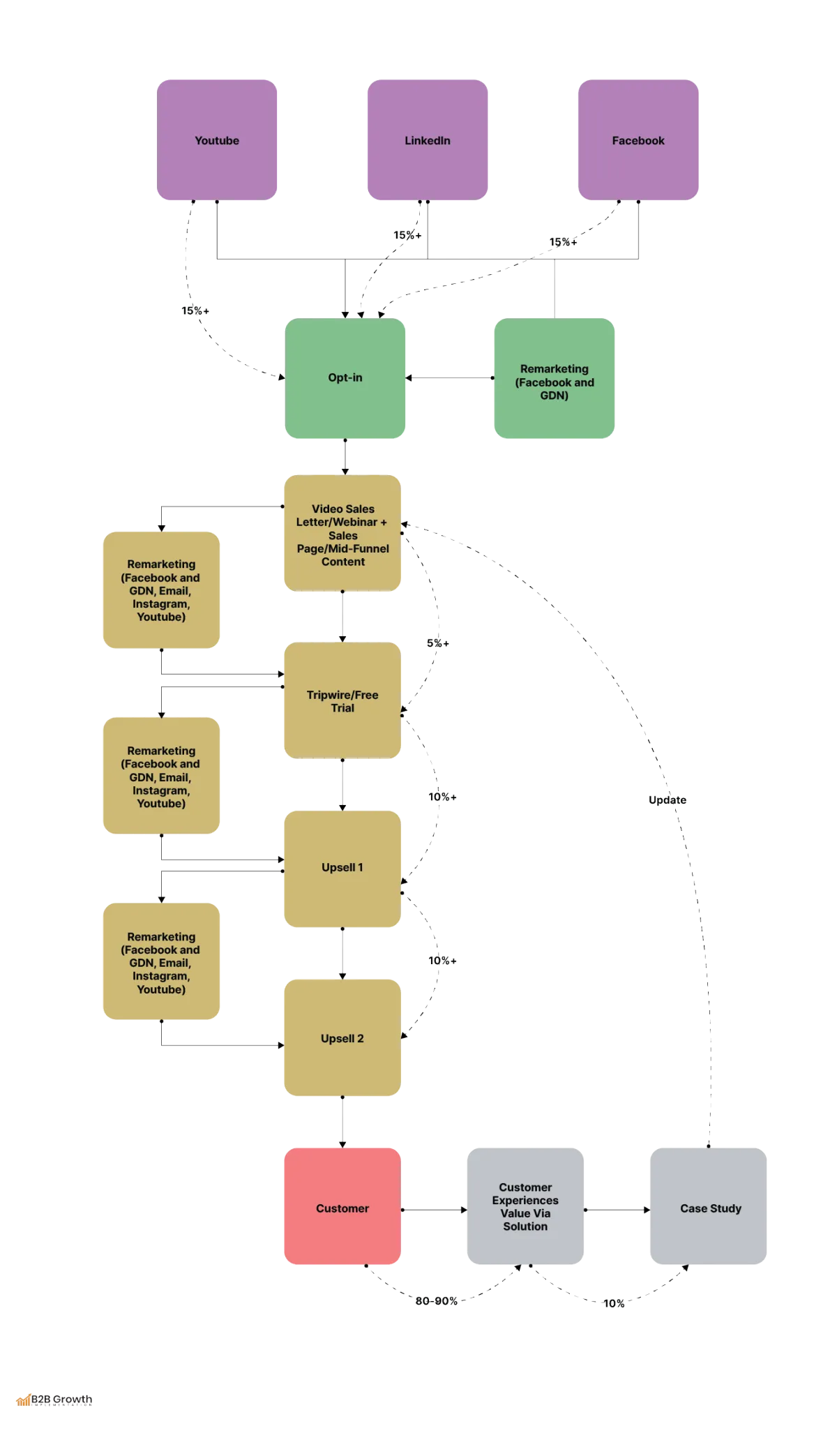
Paid Traffic + Automated Free Trial
Paid Traffic + Inside Sales
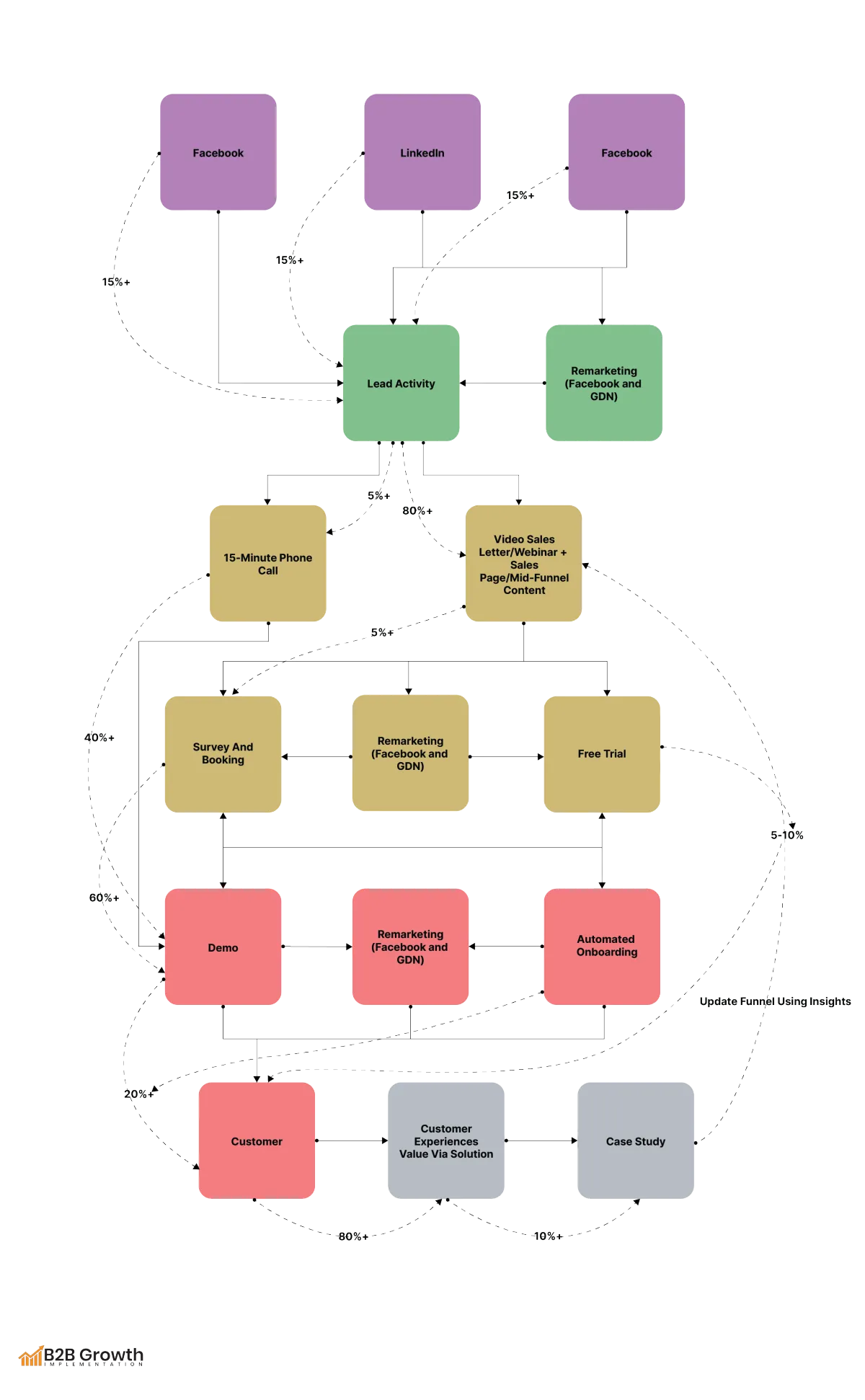
Figure 1.2: Organic Lead Generation System Variants. The appropriate lead generation system depends on the economic characteristics of the offer. High-ticket offers justify human involvement in qualification and sales; low-ticket offers require automation to maintain profitability.
Funnel Selection Based on Ticket Size
The structure of the lead generation system must align with the economic characteristics of the offer. Figure 1.2 illustrates two primary variants:
Outbound Prospecting with Inside Sales: Appropriate when the gross contribution per customer exceeds approximately $7,000. At this level, human involvement in prospecting, qualification, and closing generates positive return on investment. The system typically involves appointment setters who book and qualify opportunities for closers who conduct discovery calls, demonstrations, and proposal presentations.
Automated Prospecting with Automated Conversion: Appropriate when ticket prices are too low to justify human sales involvement. The system automates prospecting through programmatic outreach and routes interested prospects to self-service mechanisms—free trials, automated demonstrations, or direct purchase flows.
Selecting the wrong variant produces predictable failure. High-ticket offers pursued through fully automated systems fail to provide the education and trust-building that complex purchases require. Low-ticket offers pursued through human-intensive systems consume more in sales cost than they generate in revenue.
Phase III: Closing New Customers
Lead generation fills the pipeline. Closing converts the pipeline into revenue. These are distinct competencies requiring distinct systems.
The closing phase encompasses all activities from initial qualification through signed contract. For most B2B offers, this includes:
Discovery: Structured conversation to understand the prospect's situation, challenges, goals, and constraints. Discovery serves dual purposes: qualifying whether the prospect is a genuine fit and gathering information required to position the solution effectively.
Presentation: Demonstration of the solution's capability to address the prospect's specific situation. Effective presentation connects features to outcomes the prospect has identified as valuable during discovery.
Proposal: Formal documentation of the offer, including scope, pricing, terms, and expected outcomes. The proposal crystallises the discussion into a decision-ready format.
Negotiation: Resolution of concerns, objections, and commercial terms. Skilled negotiation addresses legitimate concerns without unnecessary concession.
Contracting: Execution of legal agreements and initiation of the commercial relationship.
The Role of Scripts and Process
Consistency in closing requires documented processes and proven scripts. A script is not a rigid recitation but a structured framework ensuring that critical elements are addressed in every interaction. Discovery scripts ensure essential qualification questions are asked. Objection handling scripts ensure common concerns receive effective responses. Closing scripts ensure clear calls to action are presented.
Without documented processes, closing performance varies dramatically based on individual salesperson capability and daily disposition. With documented processes, the organisation captures institutional knowledge and enables systematic improvement.
Validation of Commercial Viability
Phase III validates what Phases I and II suggested: that customers will actually pay for the solution. Product-market fit is hypothesised in Phase I and tested in Phase II through market response. Phase III provides definitive proof through completed transactions.
A company that generates leads but cannot close them has not completed Phase III. The diagnosis may lie in lead quality (Phase II), offer construction (Phase I), or closing capability (Phase III). Systematic analysis determines which.
Phase IV: Demand Generation
Where lead generation pushes outward to find buyers, demand generation pulls buyers inward. The distinction is fundamental.
Lead generation is proactive. The company identifies prospects and initiates contact. The company controls timing, message, and channel. Lead generation produces results in direct proportion to effort expended—more outreach produces more leads, subject to quality constraints.
Demand generation is attractive. The company creates content, positioning, and presence that causes prospects to initiate contact. The prospect controls timing; the company controls only whether appropriate content exists when the prospect seeks it. Demand generation produces results that compound over time—content created today continues generating leads indefinitely.
The Purpose of Demand Generation
Demand generation serves multiple strategic purposes:
Pipeline Support: Content created for demand generation also supports lead generation. Outbound messages can reference valuable content, increasing response rates. Prospects who receive outreach can be nurtured with content until they become ready to engage.
Credibility Establishment: Consistent publication of valuable content positions the company as an authority in its domain. When prospects evaluate multiple vendors, the company with demonstrated expertise holds advantage.
Reduced Acquisition Cost: Inbound leads generated through demand generation typically cost less than outbound leads and convert at higher rates. The prospect has self-selected by engaging with content, indicating pre-existing interest.
Competitive Differentiation: Companies that invest in demand generation separate themselves from competitors who rely solely on outbound tactics. The investment signals commitment and capability.
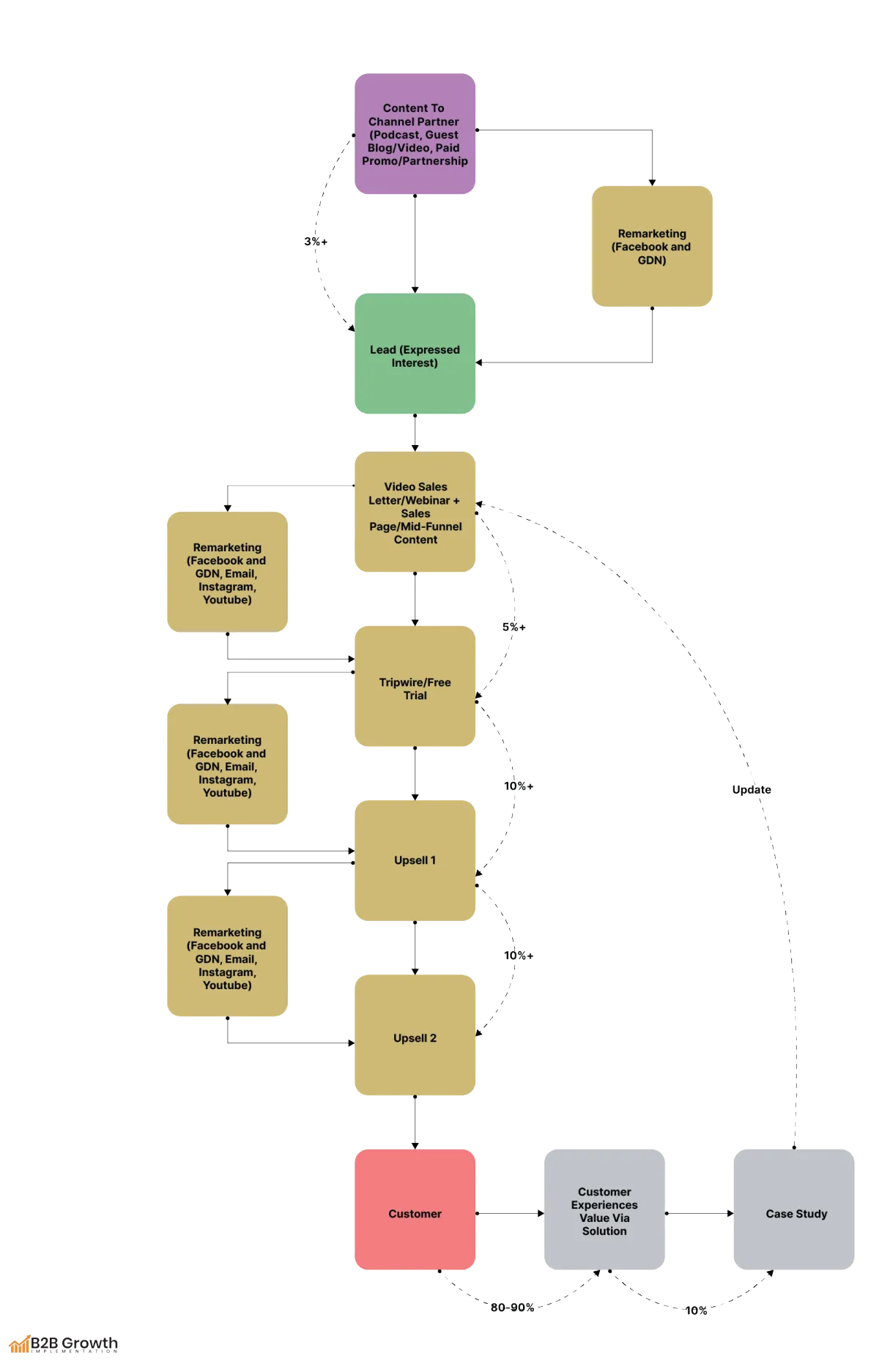
Figure 1.3: Demand Generation System Variants. As with lead generation, the appropriate demand generation system depends on ticket size and sales complexity. High-ticket offers combine content with human sales engagement; low-ticket offers route through automated conversion mechanisms.
The Buyer's Journey and Content Strategy
Effective demand generation requires understanding how buyers progress through their decision process. Traditional frameworks present this journey as linear: awareness leads to consideration leads to decision. This model provides useful simplification but fails to capture actual buyer behaviour.
In practice, buyers move forward and backward through stages, sometimes within a single day. A prospect may encounter bottom-of-funnel content (a case study demonstrating results), recognise they lack foundational understanding, retreat to top-of-funnel content (educational material explaining the problem), advance through middle-of-funnel content (comparison of solution approaches), and only then return to bottom-of-funnel content with sufficient context to evaluate it properly.
Demand generation systems must accommodate this non-linear reality. This requires:
Content at Every Stage: The company must provide valuable content addressing prospects at every stage of their journey. Gaps in content coverage cause prospects to leave the ecosystem when they need education the company has not provided.
Self-Selection Mechanisms: Prospects must be able to find content appropriate to their current stage without requiring the company to know where they are. Navigation, search, and recommendation systems enable this self-selection.
Nurturing Without Presumption: Automated sequences must avoid presuming linear progression. A prospect who downloaded an introductory guide should not receive aggressive sales outreach; they have signalled early-stage interest, not purchase readiness.
The doctrine on Demand Generation presents the Content Archetype framework (Poet, Professor, Preacher, Promoter) and detailed methodology for mapping content to buyer stages.
Phase V: Scaling with Paid Media
Paid media is an accelerant. Applied to validated systems, it multiplies results. Applied to unvalidated systems, it multiplies losses.
This principle cannot be overemphasised. The most common growth mistake among funded companies is premature paid media deployment. Investors provide capital; founders feel pressure to demonstrate growth; paid advertising appears to offer rapid scaling. The result is capital incineration—money converted into vanity metrics (impressions, clicks, website visits) without corresponding revenue.
The Preconditions for Paid Media
Three conditions must be satisfied before paid media deployment is appropriate:
Validated Top-of-Funnel Asset: The company must possess content or offers that reliably generate leads when placed in front of the target audience. This validation comes from organic testing—lead magnets that convert, content that attracts engagement, messages that generate response.
Validated Middle-of-Funnel Mechanism: The company must possess conversion mechanisms that reliably advance leads toward purchase. Typically this means a Video Sales Letter, webinar, or structured sales sequence that educates prospects and builds purchase intent. The mechanism must have demonstrated performance through organic traffic before paid amplification.
Validated Closing Capability: The company must have successfully closed customers through organic channels—ideally five to ten transactions demonstrating that the full process functions. This validation proves the entire system works, not merely the front-end components.
With these preconditions satisfied, paid media becomes a lever for predictable growth. Without them, paid media becomes an expensive education in what does not work.
Paid Traffic + Automated Free Trial
Paid Traffic + Inside Sales
Figure 1.4: Paid Traffic System Variants. Paid media funnels mirror organic system variants, with additional complexity from advertising platform requirements and attribution tracking.
The Scaling Dynamic
When the preconditions are met, paid media creates a powerful dynamic. Capital invested in advertising generates leads at a measurable cost. Those leads convert to customers at a measurable rate. Customers generate revenue that exceeds the combined cost of acquisition and delivery by a measurable margin.
At this point, growth becomes a financial equation. If the company spends one dollar and reliably generates three dollars, the question is no longer whether to scale but how quickly capital can be deployed. The constraint shifts from demand generation to operational capacity—can the company deliver what it sells at the volume advertising produces?
This is the position every B2B company should aspire to reach. It transforms growth from an uncertain struggle into a predictable process. It makes the business attractive to investors because returns can be demonstrated mathematically. It enables strategic planning based on reliable projections rather than hopeful estimates.
But this position cannot be achieved by skipping the preceding phases. The equation requires validated components. Unvalidated components produce unreliable results. Unreliable results produce unscalable systems.
The Customer Acquisition Machine
When all phases are executed and integrated, they form what we term the Customer Acquisition Machine—a comprehensive system that reliably attracts, engages, qualifies, converts, and retains customers.
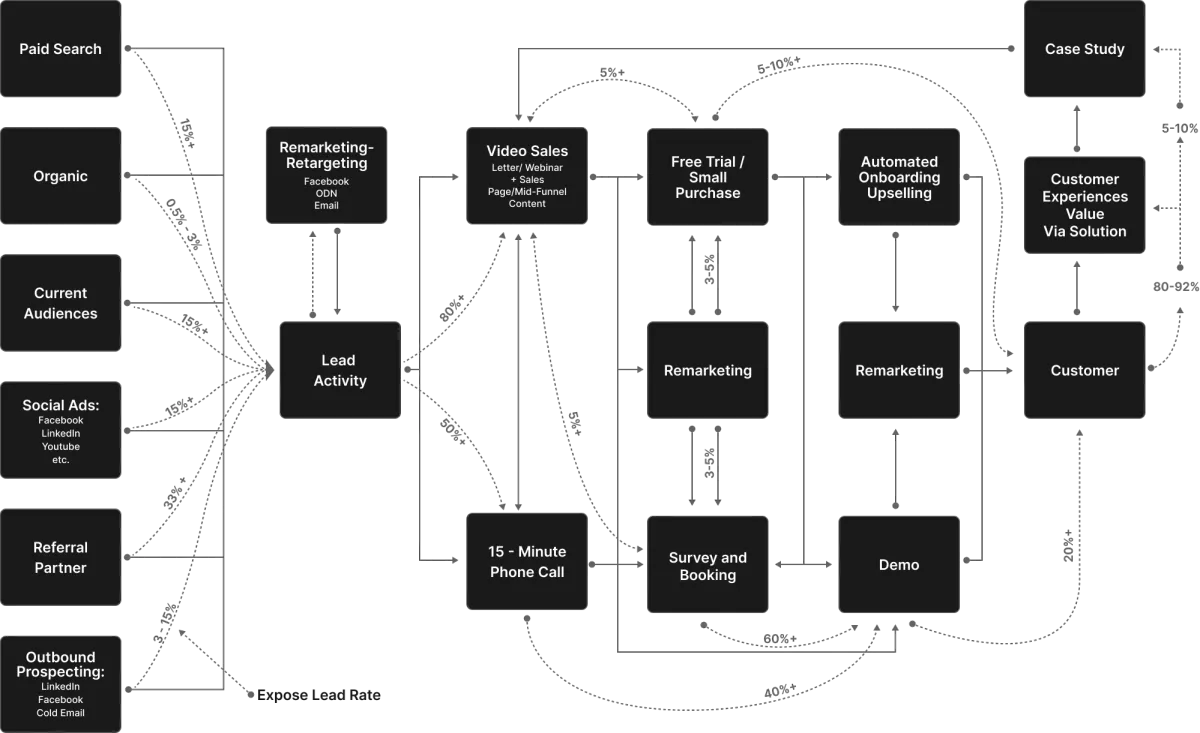
Figure 1.5: The Customer Acquisition Machine. This diagram illustrates the comprehensive system architecture, showing how traffic sources feed into lead capture mechanisms, qualification processes, engagement systems, sales processes, and feedback loops that enable continuous optimisation.
Component 1: Traffic Sources
Every customer begins as a stranger who encounters the company through some channel. Traffic sources are these channels of first contact. They include:
Outbound prospecting (email, LinkedIn, telephone)
Referrals from existing customers and partners
Social media advertising
Search engine optimisation
Pay-per-click advertising
Content marketing and guest publication
Offline events, conferences, and networking
No single traffic source is universally superior. The optimal mix depends on the target market, offer characteristics, and resource constraints. The machine must accommodate multiple sources, tracking the performance of each.
Component 2: Lead Capture
Traffic without capture is waste. Lead capture mechanisms convert anonymous visitors and passive recipients into identified prospects with whom the company can communicate.
Capture mechanisms include:
Opt-in forms offering valuable content in exchange for contact information
Event registrations for webinars, workshops, or demonstrations
Free trial sign-ups
Direct response to outbound outreach
Inbound enquiry forms
The quality of captured leads depends on the value exchanged. Low-value offers (generic newsletters) capture high volumes of low-quality leads. High-value offers (comprehensive guides, tools, assessments) capture lower volumes of higher-quality leads. The appropriate balance depends on the sales process capacity and conversion rates.
Component 3: Lead Qualification
Not every captured lead warrants sales attention. Qualification mechanisms separate prospects likely to purchase from those who are not.
For high-ticket offers, qualification typically involves human assessment—brief conversations determining whether the prospect has the problem, budget, authority, and timeline to become a customer. For low-ticket offers, qualification may be automated through behavioural scoring—tracking content consumption, email engagement, and website activity to identify high-intent prospects.
Qualification protects the most constrained resource: sales team capacity. Unqualified leads consume time that should be devoted to prospects who can become customers.
Component 4: Engagement and Nurturing
Most leads are not ready to purchase when first captured. Nurturing mechanisms maintain relationship and build readiness over time.
Effective nurturing includes:
Email sequences delivering valuable content and gentle advancement toward purchase
Retargeting advertising maintaining presence as prospects browse other sites
Social media engagement keeping the company visible
Periodic direct outreach from sales representatives
The goal is presence without pressure. When the prospect becomes ready to purchase—a timing decision they control—the company must be present in their consideration set. Nurturing ensures this presence.
Component 5: Sales Process
Qualified, nurtured leads enter the sales process for conversion. The process components were detailed in Phase III: discovery, presentation, proposal, negotiation, and contracting.
The machine requires documented processes ensuring consistency across sales team members and over time. Without documentation, the process exists only in individual heads, varying by person and vulnerable to departure.
Component 6: Remarketing
Not every lead converts on first pass through the process. Remarketing mechanisms re-engage leads who did not purchase.
Remarketing differs from nurturing. Nurturing addresses leads who are not yet ready. Remarketing addresses leads who were ready but did not convert—perhaps due to timing, competing priorities, or unresolved objections.
Remarketing includes:
Re-engagement email sequences triggered by prolonged inactivity
Special offers or incentives for returning prospects
Direct outreach acknowledging the previous interaction
Advertising specifically targeting previous visitors or engagers
Many companies neglect remarketing, treating unconverted leads as lost. This neglect wastes the substantial investment made in generating those leads initially.
Component 7: Case Study Collection
Completed sales create customers. Customers create opportunities for case studies—documented evidence of successful outcomes.
Case studies are among the most powerful marketing assets a B2B company can possess. They provide proof that the solution works, in specific contexts, with measurable results. Prospects evaluating vendors seek this proof; companies that provide it outcompete those that cannot.
The machine includes systematic processes for:
Identifying successful customer outcomes suitable for documentation
Interviewing customers to capture their perspective and results
Producing case study content in multiple formats (written, video, data visualisation)
Deploying case studies throughout the sales and marketing process
Case study collection is not a marketing afterthought. It is an operational component requiring the same systematic attention as lead generation or sales process.
Component 8: Feedback Loop
Customer interactions generate intelligence. Feedback loops ensure this intelligence improves the machine.
Feedback flows from multiple sources:
Sales conversations revealing objections, concerns, and competitive dynamics
Customer support interactions identifying product gaps and opportunities
Win/loss analysis examining why deals closed or did not
Customer surveys measuring satisfaction and identifying improvement areas
Market monitoring tracking competitive moves and industry shifts
Without structured feedback loops, this intelligence remains trapped in individual conversations, unavailable for systematic improvement. With structured loops, the entire organisation learns from every interaction.
Component 9: Technology Integration
The machine requires technological infrastructure to operate at scale. This infrastructure includes:
Customer Relationship Management (CRM) systems tracking prospects and customers through the entire lifecycle
Marketing automation platforms executing email sequences, lead scoring, and nurturing workflows
Analytics tools measuring performance across all components
Integration mechanisms connecting disparate systems into coherent data flows
Technology enables scale but does not create effectiveness. A sophisticated technology stack applied to an ineffective process produces sophisticated ineffectiveness. The machine must work manually before automation amplifies it.
Component 10: Continuous Training
The machine is operated by people. Those people require continuous development to maintain and improve performance.
Training encompasses:
Product knowledge ensuring accurate representation of capabilities
Sales skill development improving conversion effectiveness
Process training ensuring consistent execution
Market intelligence keeping the team current on competitive dynamics
Companies that invest in training outperform those that do not. The investment compounds as improved skills are applied across every customer interaction.
The Cyclical Nature of Growth
The Five Phases model presents a sequential progression, and this sequence is correct for initial traversal. A company cannot effectively scale paid media before validating organic systems, cannot validate organic systems before closing customers, cannot close customers before generating leads, cannot generate leads before confirming product-market fit.
However, the model is not purely linear. Once initial traversal is complete, the phases become cyclical. Companies must continuously:
Revalidate product-market fit as markets evolve
Refine lead generation as channels mature and competitors adapt
Improve closing processes as the sales team grows and offer complexity increases
Expand demand generation as content ages and audience expectations shift
Optimise paid media as platforms change and costs fluctuate
Growth is not a destination achieved and maintained. It is a process requiring perpetual attention and refinement.
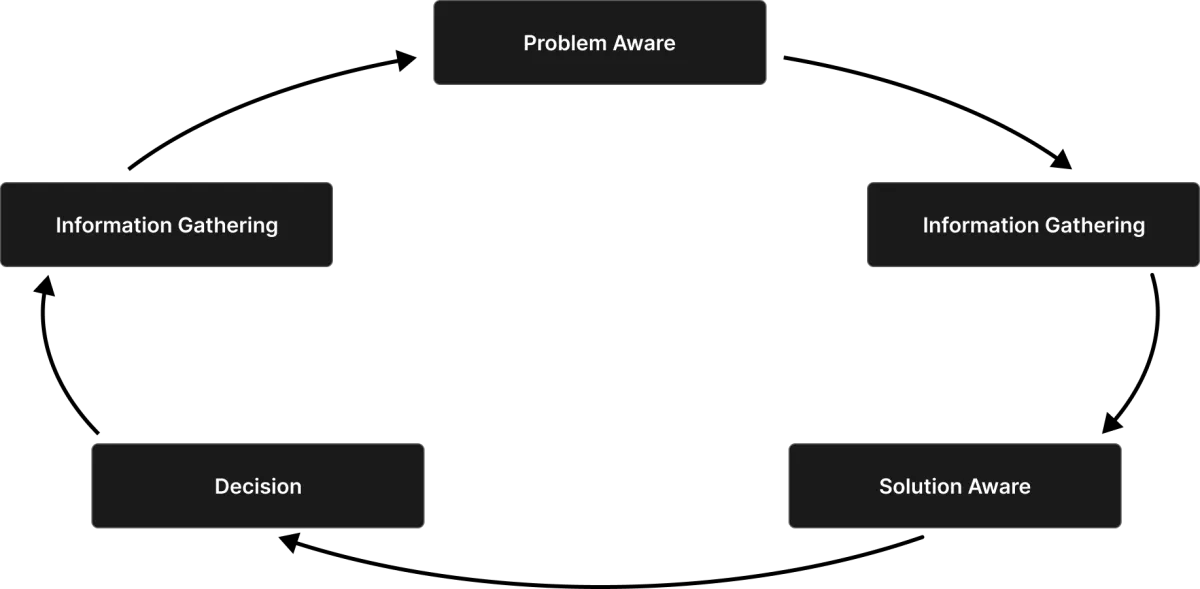
Figure 1.5: The Customer Acquisition Machine. This diagram illustrates the comprehensive system architecture, showing how traffic sources feed into lead capture mechanisms, qualification processes, engagement systems, sales processes, and feedback loops that enable continuous optimisation.
Implications for System Design
The cyclical nature of buyer behaviour has direct implications for system design:
Lead Generation Systems must recognise when previously engaged prospects have returned to earlier stages. A prospect who received bottom-of-funnel outreach six months ago may now require top-of-funnel education. Treating them as advanced because of historical engagement produces misaligned communication.
Demand Generation Systems must provide content at all stages simultaneously, allowing buyers to self-select their entry point and progress at their own pace. Content gaps at any stage cause prospects to leave the ecosystem.
Sales Processes must qualify not only fit but timing. A prospect who fits all criteria but is not ready to purchase requires nurturing, not closing. Premature closing attempts damage relationships and waste sales capacity.
Automation Systems must track behavioural signals indicating stage position and adjust engagement accordingly. Opens, clicks, page visits, and content downloads reveal where prospects are in their journey. Automation should respond to these signals, not ignore them.
Companies that design systems accounting for cyclical buyer behaviour outperform those that assume linear progression. The assumption of linearity is convenient for system design but false to buyer reality.
Common Failure Patterns
Understanding what causes failure illuminates what produces success. The following patterns appear repeatedly across struggling B2B companies:
Failure Pattern 1: Phase Skipping
The company attempts to execute a later phase before completing an earlier one. Common manifestations include:
Investing in paid advertising before validating organic lead generation
Scaling sales hiring before confirming product-market fit
Building demand generation content before developing closing capability
Phase skipping produces resource waste. Money, time, and attention flow into activities that cannot succeed because prerequisite conditions are not met.
Failure Pattern 2: Tactical Fragmentation
The company executes disconnected tactics without systematic integration. Symptoms include:
Marketing generates leads that sales does not follow up
Sales closes customers that success cannot retain
Content is produced without connection to lead capture
Data exists in multiple systems without unified visibility
Tactical fragmentation produces activity without results. Each function operates independently, optimising locally while failing globally.
Failure Pattern 3: Premature Scaling
The company attempts to scale before systems are validated. Manifestations include:
Hiring salespeople before sales process is documented
Increasing advertising spend before conversion rates are acceptable
Expanding to new markets before current market is captured
Premature scaling multiplies problems rather than results. Ineffective processes at small scale become catastrophically ineffective at large scale.
Failure Pattern 4: Measurement Neglect
The company operates without clear metrics for system performance. Symptoms include:
Inability to identify which traffic sources produce customers
Lack of visibility into conversion rates at each funnel stage
No tracking of lead quality by source or campaign
Decisions made on intuition rather than evidence
Measurement neglect makes improvement impossible. Without data, the company cannot know what works, what fails, or where to focus attention.
Failure Pattern 5: Feedback Isolation
The company fails to connect market intelligence to system improvement. Manifestations include:
Sales objections are not communicated to marketing
Customer complaints are not communicated to product
Competitive intelligence is not incorporated into positioning
Lost deal analysis is not performed or not acted upon
Feedback isolation prevents learning. The company repeats mistakes because the lessons from those mistakes never reach the people who could prevent recurrence.
The Principle of Sequential Investment
The patterns above share a common cause: misallocated investment. Resources flow into activities before the preconditions for those activities are established.
The antidote is sequential investment—allocating resources to each phase only after the preceding phase is sufficiently complete. This principle requires discipline. The urge to "move fast" and "do everything at once" must be resisted.
Sequential investment does not mean slow investment. Each phase can be executed with urgency. But urgency within a phase differs from skipping between phases. The founder who intensively validates product-market fit for eight weeks before beginning lead generation will outperform the founder who casually attempts both simultaneously for six months.
The sequence is: validate, then invest. Confirm that the activity produces results, then allocate resources to scale the activity. This sequence applies at every phase and within every phase.
Integration with Subsequent Doctrines
This foundational doctrine establishes the framework. The subsequent doctrines provide depth on each component:
Doctrine II: Product-Market Fit presents the N-T-P-M-A Framework for systematic validation of offer-market alignment. It contrasts the Customer Development Model with the traditional Product Development Model and provides specific methodology for confirming fit before scaling investment.
Doctrine III: Lead Generation details the construction of outbound prospecting systems across email, LinkedIn, and telephone channels. It establishes precise terminology, introduces the Exposure Lead Rate metric, and presents the 4P Approach for systematic market testing.
Doctrine IV: Demand Generation addresses content strategy, buyer journey mapping, and the construction of systems that attract rather than pursue. It presents the Content Archetype framework and the methodology for creating what we term Black Hole Content.
Doctrine V: Scaling with Paid Media details the preconditions, mechanics, and optimisation processes for paid advertising deployment. It addresses platform selection, funnel construction, and the metrics that govern scaling decisions.
Each doctrine is complete in itself yet designed for integration with the others. Together, they provide comprehensive methodology for building the Customer Acquisition Machine.
Summary of Principles
The fundamental problem of B2B growth—reliably converting strangers into customers—yields to systematic approach. The Five Phases framework presented in this doctrine provides the structure for that approach.
The phases are sequential. Product-market fit precedes lead generation precedes closing capability precedes demand generation precedes paid media scaling. Violating this sequence produces predictable failure.
The phases are cyclical. Once initially traversed, each phase requires ongoing attention as markets evolve, competitors adapt, and systems mature. Growth is a process, not a destination.
The phases integrate into a machine. When all components function and connect, they produce reliable, predictable revenue generation. When components are missing or disconnected, they produce the sporadic, frustrating results that characterise most B2B companies.
The choice facing every B2B company is not whether to address these phases but whether to address them systematically or haphazardly. The systematic approach requires more discipline upfront. It produces superior results over time.
This doctrine provides the framework. The subsequent doctrines provide the methodology. Implementation produces the results.
Conclusion
The fundamental problem of B2B growth—reliably converting strangers into customers—yields to systematic approach. The Five Phases framework presented in this doctrine provides the structure for that approach.
The phases are sequential. Product-market fit precedes lead generation precedes closing capability precedes demand generation precedes paid media scaling. Violating this sequence produces predictable failure.
The phases are cyclical. Once initially traversed, each phase requires ongoing attention as markets evolve, competitors adapt, and systems mature. Growth is a process, not a destination.
The phases integrate into a machine. When all components function and connect, they produce reliable, predictable revenue generation. When components are missing or disconnected, they produce the sporadic, frustrating results that characterise most B2B companies.
The choice facing every B2B company is not whether to address these phases but whether to address them systematically or haphazardly. The systematic approach requires more discipline upfront. It produces superior results over time.
This doctrine provides the framework. The subsequent doctrines provide the methodology. Implementation produces the results.
Summary of Principles
Principle 1: Every B2B company must solve the same fundamental problem—reliably converting strangers into customers.
Principle 2: Tactics without systems produce inconsistent results. Systems produce predictable, scalable results.
Principle 3: The Five Phases must be traversed sequentially. Each phase creates preconditions for the next.
Principle 4: Product-market fit is the foundation. No amount of sales or marketing excellence compensates for its absence.
Principle 5: Lead generation converts strangers to prospects to leads through systematic outbound activity.
Principle 6: Closing capability converts leads to customers through documented sales processes.
Principle 7: Demand generation creates market gravity that attracts buyers without direct outreach.
Principle 8: Paid media is an accelerant. Applied to validated systems, it multiplies results. Applied to unvalidated systems, it multiplies losses.
Principle 9: The Customer Acquisition Machine integrates all components into a comprehensive revenue-generating system.
Principle 10: Buyer journeys are cyclical, not linear. Systems must accommodate forward and backward movement through stages.
Principle 11: Sequential investment, validating before scaling, prevents resource waste and builds sustainable growth.
Principle 12: Growth is a continuous process requiring perpetual attention, measurement, and refinement.

Case Studies
Contact
85 Great Portland Street, London, W1W 7LT
The methodology for predictable B2B revenue.
© 2026 B2B Growth Systems. All rights reserved.