Scaling with Paid Media
The Systematic Amplification of Validated Commercial Systems Through Paid Advertising
Preface
This document constitutes the fifth doctrine of B2B Growth Systems, addressing the fifth and final phase in the Five Phases framework: Scaling with Paid Media. With product-market fit established, lead generation operational, closing capability proven, and demand generation building momentum, the company is now positioned to accelerate growth through paid advertising.
Paid media is routinely misapplied. Companies attempt to scale before validation. They pour capital into advertising systems that have not been proven, hoping to buy their way to growth. This approach produces expensive lessons, not profitable customers.
This doctrine establishes the correct sequencing and methodology. It presents paid media not as a starting point but as an accelerant, fuel applied to fires that are already burning. It provides the frameworks for determining readiness, selecting appropriate models, structuring campaigns, and measuring performance. The reader who masters this doctrine will understand when to scale, how to scale, and what returns to expect.
The Thesis
Paid media is the systematic purchase of attention to accelerate the distribution of a validated commercial system. It is not a substitute for product-market fit, lead generation capability, or closing ability. It is an amplifier of systems that already work.
This distinction is fundamental. Paid media does not create demand—it captures attention. If the underlying system converts attention into revenue, paid media accelerates that conversion. If the underlying system does not convert, paid media accelerates losses.
The metaphor is instructive: paid media is fuel. Applied to a functioning engine, fuel produces motion. Applied to a broken engine, fuel produces nothing—or worse, fire in unintended places. The engine must work before fuel is added.
This is why paid media occupies Phase V in the Five Phases framework. The prior phases build and validate the engine:
Phase I: Product-Market Fit establishes that the product solves a real problem for an identifiable market willing to pay.
Phase II: Lead Generation proves that prospects can be identified and engaged through systematic outreach.
Phase III: Closing Capability demonstrates that engaged prospects can be converted into paying customers at predictable rates.
Phase IV: Demand Generation builds content assets that attract and nurture prospects over time.
Phase V: Scaling with Paid Media accelerates distribution of the validated system to reach more prospects faster.
The sequence matters. Companies that attempt Phase V without completing Phases I through IV discover expensive truths: they pay to attract prospects who do not convert, to nurture leads who never buy, to demonstrate products that do not fit market needs. The capital is consumed; the lessons are painful.
The Readiness Criteria
Before deploying paid media, a company must satisfy specific readiness criteria. These criteria ensure that paid media will amplify success rather than accelerate failure.
Criterion 1: Validated Product-Market Fit
The company has confirmed, through actual customer acquisition and retention, that its product solves a meaningful problem for an identifiable market. This confirmation includes:
Customers acquired through deliberate effort (not luck or relationship)
Retention rates indicating genuine value delivery
Willingness to pay at price points supporting business economics
Documented understanding of target customer characteristics
Without validated product-market fit, paid media attracts the wrong prospects, generates unqualified leads, and produces customers who churn.
Criterion 2: Proven Conversion Mechanisms
The company has established that its conversion system works—that leads become opportunities, opportunities become customers, and the process is predictable. This establishment includes:
Documented conversion rates at each funnel stage
Tested messaging that resonates with the target market
Proven offer structure that motivates purchase
Sales capability that closes at known rates
Without proven conversion mechanisms, paid media generates traffic that does not convert, leads that do not advance, and opportunities that do not close.
Criterion 3: Unit Economics That Support Scale
The company understands its unit economics and has confirmed that they support paid customer acquisition. This confirmation includes:
Customer lifetime value (LTV) calculation based on actual data
Customer acquisition cost (CAC) from organic channels as baseline
LTV:CAC ratio of at least 3:1 (ideally 5:1 or higher)
Gross contribution per customer sufficient to absorb acquisition costs
Without supportive unit economics, paid media produces customers who cost more to acquire than they generate in value.
Criterion 4: Capacity to Fulfill
The company has operational capacity to serve increased customer volume. This capacity includes:
Delivery infrastructure that can scale
Support systems that can handle volume
Team bandwidth or hiring capability
Capital to finance growth
Without fulfillment capacity, paid media generates customers the company cannot serve, producing churn, reputation damage, and wasted acquisition investment.
Criterion 5: Measurement Infrastructure
The company has systems to track performance from ad impression through customer acquisition. This infrastructure includes:
Pixel and conversion tracking properly implemented
CRM or tracking system capturing lead sources
Attribution methodology defined
Reporting dashboards operational
Without measurement infrastructure, paid media operates blind—unable to optimise, unable to identify what works, unable to scale intelligently.
The Return Threshold
Paid media should not merely work—it should work extraordinarily well. The threshold for acceptable performance is not break-even or modest profit. The threshold is substantial, compounding return.
The 5x Minimum Standard
Properly executed paid media in B2B contexts should achieve minimum 5x return on advertising spend. This means every dollar invested in advertising should generate at least five dollars in gross contribution.
This standard is not aspirational—it is operational. Systems that achieve less than 5x return consume capital that could be deployed more productively. They indicate suboptimal targeting, messaging, or conversion mechanisms requiring correction before continued investment.
Why 5x, Not 2x or 3x?
Several factors justify the 5x threshold:
Measurement imprecision: Attribution in B2B is inexact. A 2x measured return may be 1x actual return once attribution errors are accounted for.
Hidden costs: Direct advertising costs are visible; indirect costs (creative development, campaign management, testing cycles) often are not. A 5x gross return accommodates these hidden costs.
Opportunity cost: Capital deployed in paid media is capital not deployed elsewhere. The return must exceed alternative uses.
Buffer for degradation: Performance degrades over time as audiences saturate and competition increases. Initial strong returns provide buffer against future decline.
Reinvestment capacity: 5x return enables sustainable reinvestment. At 5x, a company can take $1 profit from every $1 spent—returning the original $1 to advertising while retaining $1 for operations and $3 for margin.
The Three Paid Media Channels
B2B paid media operates through three primary channels, each with distinct characteristics and applications.
Channel 1: Search Advertising (Google Ads)
Search advertising captures prospects actively seeking solutions. When a prospect searches "B2B lead generation software" or "sales consulting firms," they signal intent. Search advertising positions offers in front of this intent.
Characteristics:
Intent-based: Reaches prospects actively seeking
Keyword-driven: Performance depends on keyword selection and bid strategy
Competitive: High-value keywords attract aggressive bidding
Measurable: Direct attribution from search to conversion
Best for:
Capturing bottom-of-funnel demand (prospects ready to buy)
Testing message-market fit quickly
Supplementing organic search presence
Reaching prospects with explicit, searchable problems
Economics: Search advertising in B2B typically operates at higher cost-per-click but higher conversion rates. The prospect has signalled intent; conversion requires proving you can fulfil it.
Channel 2: Social Advertising (Facebook/Meta, LinkedIn)
Social advertising interrupts prospects who are not actively seeking but fit target criteria. The prospect is scrolling their feed; the advertisement appears based on demographic, firmographic, or behavioural targeting.
Characteristics:
Interruption-based: Reaches prospects not actively seeking
Targeting-driven: Performance depends on audience definition
Creative-dependent: Scroll-stopping creative determines engagement
Scalable: Large audiences enable significant reach
Best for:
Building awareness among target audiences
Reaching prospects earlier in the buyer's journey
Testing messages and offers with defined segments
Generating leads for nurturing sequences
Economics: Social advertising in B2B typically operates at lower cost-per-impression but requires compelling creative and clear value proposition to overcome the interruption dynamic. The prospect did not ask to see the ad; the ad must earn attention.
Channel 3: Retargeting Advertising
Retargeting re-engages prospects who have previously interacted with the company—visited the website, engaged with content, entered the funnel but not converted. These prospects have demonstrated interest; retargeting maintains presence and advances conversion.
Characteristics:
Re-engagement based: Reaches known prospects, not cold audiences
Pixel-dependent: Requires proper tracking implementation
Journey-aware: Can sequence messaging based on prospect behaviour
High-efficiency: Reaches warm audiences with demonstrated interest
Best for:
Maintaining presence with engaged prospects
Advancing prospects through the buyer's journey
Recovering abandoned conversions
Long-term nurturing of prospects not yet ready to buy
Economics: Retargeting typically produces the highest returns because audiences are pre-qualified. The prospect has already demonstrated interest; retargeting provides continued exposure and appropriate calls to action.
The 12-Month Retargeting System
Retargeting is not a single campaign but a system—a sustained, structured programme that maintains presence with prospects throughout extended buying cycles.
B2B purchase decisions rarely occur quickly. Prospects research, evaluate, consult internally, budget, and finally decide—a process often spanning months. A company that retargets for 30 days captures only a fraction of eventual buyers. A company that retargets for 12 months captures buyers whenever they become ready.
The Structure
The 12-month retargeting system operates on weekly creative rotation across three content categories:
Value Content: Educational, insight-driven content that provides genuine value without explicit selling. Blog posts, guides, frameworks, case studies presented for learning rather than conversion.
Indirect Offers: Content that advances commercial interest without direct purchase ask. Webinar invitations, diagnostic tools, assessment offers, consultation opportunities.
Direct Offers: Explicit commercial asks. Demo requests, trial offers, purchase opportunities, limited-time promotions.
The Rotation
Each week, two new advertisements are deployed:
Week 1: Value content (industry insight)
Week 2: Value content (how-to guide)
Week 3: Indirect offer (webinar invitation)
Week 4: Value content (case study)
Week 5: Direct offer (consultation)
Week 6: Value content (framework explanation)
(Pattern continues across 52 weeks)
The rotation serves multiple purposes:
Freshness: Audiences fatigue on repeated creative. Weekly rotation prevents staleness.
Journey coverage: Prospects at different stages need different content. Rotation ensures appropriate content reaches prospects wherever they are.
Educational spectrum: Some prospects need awareness building; others need evaluation support; others need purchase justification. Rotation addresses all educational needs.
Timing flexibility: Prospects become ready at unpredictable moments. Consistent presence ensures the company is visible when readiness occurs.
The Creative Library
A 12-month system requires substantial creative inventory:
52 weeks × 2 ads per week = 104 advertisements annually
Approximately 60 value content pieces
Approximately 26 indirect offer pieces
Approximately 18 direct offer pieces
This inventory should be developed in advance, not created reactively. Batch production enables quality control, strategic alignment, and operational consistency.
The creative library is not static. Performance data identifies high-performing pieces for extended rotation and underperformers for replacement. The system evolves based on evidence.
The Two Scaling Models
Paid media in B2B follows two primary models, each appropriate to different business contexts. Model selection depends on unit economics, sales process requirements, and target market characteristics.
Model 1: Paid Traffic + Inside Sales
This model combines paid advertising with human sales conversion. Advertising generates leads; sales representatives qualify, nurture, and close.
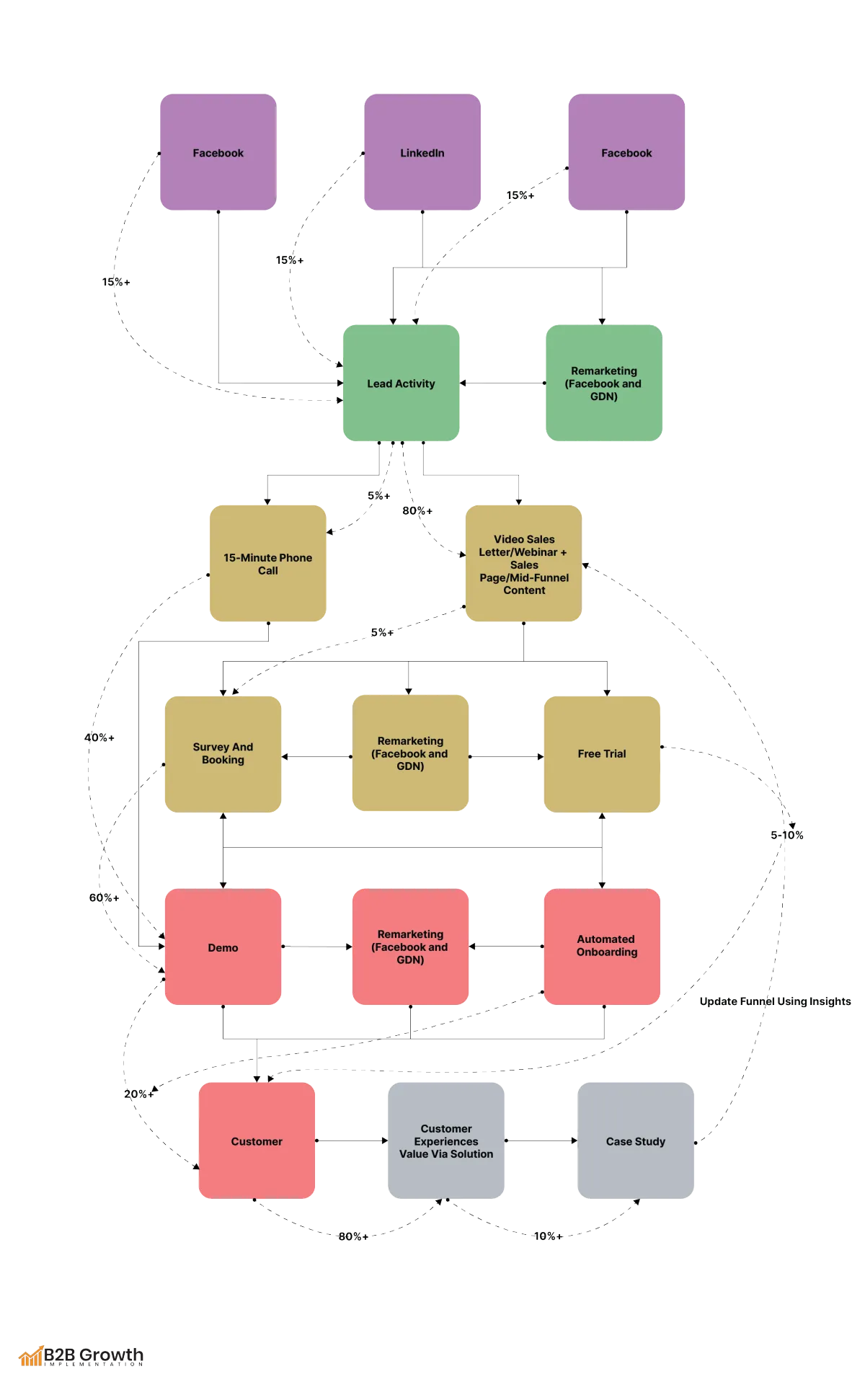
Figure 1.4: Paid Traffic System Variants. Paid media funnels mirror organic system variants, with additional complexity from advertising platform requirements and attribution tracking.
The Flow:
Advertisement reaches target prospect
Prospect clicks, enters landing page
Prospect opts in (provides contact information for value exchange)
Lead is routed to inside sales
Sales representative qualifies lead
Qualified lead receives demo or consultation
Sales representative closes deal
The Economics:
| Metric | Benchmark Range |
|---|---|
| CPM | $30–50 |
| CTR | 1–3% |
| CPC | $2–5 |
| Opt-in Rate | 15–30% |
| Cost per Lead | $15–35 |
| Free Trial → Lead Conversion | 20–40% |
| Trial → Paid Conversion | 10–20% |
| Total CPA | $200–700 |
When to Use:
Gross contribution per customer exceeds $3,000
Product requires explanation, demonstration, or customisation
Sales process benefits from human relationship
Target market expects consultative engagement
Advantages:
Human conversion overcomes complex objections
Relationship building enables larger deals
Qualification prevents poor-fit customers
Flexibility to address unique situations
Constraints:
Sales capacity limits scale
Human cost increases total CPA
Hiring and training create lag
Performance varies by representative
Model 2: Paid Traffic + Automated Conversion
This model combines paid advertising with automated conversion mechanisms. Advertising generates leads; automated systems qualify, nurture, and convert without human involvement in every transaction.
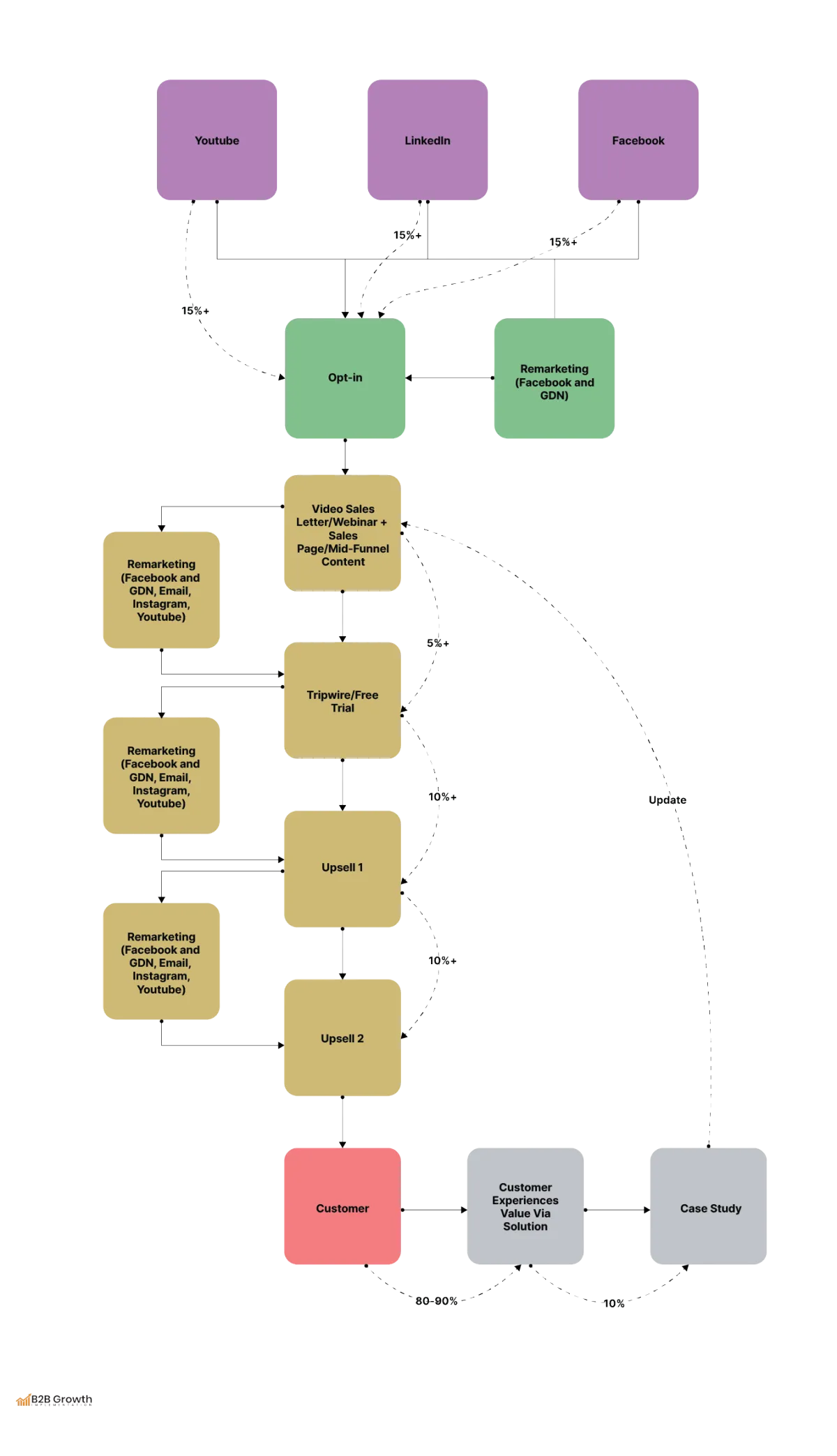
Figure 5.8: Paid Traffic + Automated Conversion Model. Advertising generates leads that flow through automated qualification and conversion. Automation enables scale without proportional human cost but requires robust systems and lower-ticket positioning.
The Flow:
Advertisement reaches target prospect
Prospect clicks, enters landing page
Prospect opts in or makes direct purchase
Automated sequences nurture lead
Automated scoring identifies ready buyers
Self-service conversion (trial, purchase) or automated handoff to sales for high-value opportunities
The Economics:
| Metric | Benchmark Range |
|---|---|
| CPM | $30–50 |
| CTR | 1–3% |
| CPC | $2–5 |
| Opt-in Rate | 15–30% |
| Cost per Lead | $15–35 |
| Free Trial → Lead Conversion | 20–40% |
| Trial → Paid Conversion | 10–20% |
| Total CPA | $200–700 |
When to Use:
Lower ticket prices (under $3,000 gross contribution)
Product is self-explanatory or trial-friendly
Target market prefers self-service
Scale is prioritised over personalisation
Advantages:
Unlimited scale without proportional cost increase
Consistent execution without human variability
24/7 operation without staffing constraints
Lower total CPA enables broader market reach
Constraints:
Automated systems require significant setup investment
Less flexibility for complex or unusual situations
Lower conversion rates without human intervention
Requires robust technical infrastructure
The Full Revenue System
The most sophisticated B2B operations integrate multiple channels and models into a unified revenue system. This integration captures prospects across all stages and engagement preferences.
The Components:
Paid Traffic: Search and social advertising generating new prospect awareness and lead capture.
Organic Content: Demand generation content attracting inbound interest without advertising cost.
Outbound Prospecting: Direct outreach to targeted prospects generating conversations and leads.
Retargeting: Persistent re-engagement with all prospects who have entered the ecosystem.
Remarketing: Email and other owned-channel engagement with opted-in leads.
Conversion Zone: Sales or automated systems converting leads to customers.
The Metrics:
| System Component | Key Metrics |
|---|---|
| Paid Traffic | CPC, CPL, ROAS |
| Organic Content | Views, Click Rate, Lead Rate |
| Outbound Prospecting | Exposure Rate, Lead Rate, CPL |
| Retargeting | Impressions, Click Rate, Conversion Lift |
| Remarketing | Open Rate, Click Rate, Conversion Rate |
| Conversion Zone | Lead-to-Demo Rate, Show Rate, Close Rate |
Integrated Performance:
A well-tuned full revenue system produces compound performance:
Paid traffic generates initial awareness
Content builds credibility and trust
Outbound captures high-value targets directly
Retargeting maintains presence throughout buying cycle
Remarketing nurtures until readiness
Conversion closes when timing aligns
The interaction effects exceed the sum of components. Prospects who encounter the company through multiple channels convert at higher rates than single-channel exposure.
Campaign Structure and Optimisation
Paid media campaigns require systematic structure and continuous optimisation. This section provides operational framework for campaign execution.
Campaign Architecture
Campaigns should be structured hierarchically:
Account Level: Overall advertising account containing all campaigns Campaign Level: Grouped by objective (awareness, lead generation, retargeting) Ad Set Level: Grouped by audience or targeting criteria Ad Level: Individual creative executions
This hierarchy enables targeted optimisation. Poor performance at any level can be isolated and addressed without disrupting functioning elements.
Testing Protocol
Systematic testing accelerates optimisation:
Creative Testing: Test multiple creative variations (images, headlines, copy) to identify highest performers. Run tests until statistical significance is achieved (typically 1,000+ impressions per variant minimum).
Audience Testing: Test multiple audience definitions to identify most responsive segments. Narrow high-performing audiences; expand or abandon poor performers.
Offer Testing: Test multiple offers (different lead magnets, different value propositions) to identify strongest conversion drivers.
Landing Page Testing: Test multiple landing page variations to optimise conversion rate independent of traffic quality.
Optimisation Sequence
Optimise in sequence from top to bottom of funnel:
Traffic Quality: Ensure ads reach appropriate audiences. Fix targeting before optimising downstream.
Click-Through: Ensure ads earn clicks. Fix creative before optimising conversion.
Landing Conversion: Ensure landing pages convert clicks to leads. Fix pages before optimising sales.
Sales Conversion: Ensure leads become customers. Fix sales process as final optimisation layer.
Optimising downstream while upstream is broken wastes effort. A perfect landing page cannot rescue traffic from wrong audiences. A perfect sales process cannot rescue unqualified leads.
Budget Allocation and Scaling
Budget allocation follows performance data, not assumptions. This section provides framework for initial allocation and performance-based scaling.
Initial Allocation
Before performance data exists, allocate budget based on strategic priorities:
50% to proven channels (if prior experience exists)
30% to high-potential channels (based on market research)
20% to testing new channels
This allocation balances exploitation of known opportunities with exploration of potential opportunities.
Performance-Based Reallocation
As data accumulates, reallocate based on performance:
Expanding winners: Channels exceeding 5x ROAS receive increased budget until performance degrades or audience saturates.
Maintaining performers: Channels achieving 3-5x ROAS maintain current budget while optimisation efforts attempt improvement.
Reducing underperformers: Channels below 3x ROAS receive reduced budget while problems are diagnosed.
Eliminating failures: Channels that cannot be improved to acceptable performance are eliminated.
Scaling Limits
Scaling is not unlimited. Each channel has saturation points:
Audience saturation: Target audiences are finite. As reach increases, frequency increases and incremental returns decline.
Creative fatigue: Audiences tire of repeated exposure. Fresh creative is required to maintain engagement.
Competitive response: Success attracts competition. Increased bidding and improved competitor offerings reduce advantage.
Platform algorithm changes: Platform behaviour changes over time. What works today may not work tomorrow.
Scale aggressively while performance holds, but monitor for degradation signals and prepare for plateau.
Measuring Paid Media Performance
Measurement is the foundation of paid media optimisation. Without accurate measurement, decisions are guesses; with accurate measurement, decisions are data-driven.
Primary Metrics
Cost Per Click (CPC): The cost to generate one click on an advertisement. Indicates creative and targeting efficiency.
Cost Per Lead (CPL): The cost to generate one lead (contact information captured). Indicates landing page and offer efficiency.
Cost Per Acquisition (CPA): The total cost to acquire one customer. The ultimate efficiency metric.
Return on Ad Spend (ROAS): Revenue generated divided by advertising spend. The ultimate effectiveness metric.
Customer Acquisition Cost (CAC): Total marketing and sales cost divided by customers acquired. Broader than CPA, includes all acquisition costs.
Attribution Methodology
Attribution—determining which touchpoints contributed to conversion—is challenging in B2B. Several approaches exist:
First-touch attribution: Credits the first touchpoint with full conversion value. Useful for understanding awareness generation.
Last-touch attribution: Credits the last touchpoint before conversion with full conversion value. Useful for understanding final conversion drivers.
Linear attribution: Credits all touchpoints equally. Useful for understanding full journey contribution.
Time-decay attribution: Credits touchpoints more heavily as they approach conversion. Balances journey recognition with conversion emphasis.
Data-driven attribution: Uses statistical models to determine actual contribution of each touchpoint. Most accurate but requires significant data volume.
No attribution model is perfect. Select a model appropriate to business context and apply it consistently. Consistency enables comparison over time even if absolute attribution is imperfect.
Reporting Cadence
Establish regular reporting rhythms:
Daily: Monitor for anomalies (budget pacing, delivery issues, sudden performance changes)
Weekly: Review performance trends, identify optimisation opportunities, adjust creative
Monthly: Comprehensive performance analysis, budget reallocation, strategic assessment
Quarterly: Strategic review, channel evaluation, planning adjustments
Common Mistakes in Paid Media
Understanding common mistakes accelerates learning. These errors occur frequently; avoiding them provides competitive advantage.
Mistake 1: Scaling Before Validation
Companies pour budget into advertising before confirming conversion systems work. They hope paid traffic will produce customers that organic efforts could not generate. This hope is misplaced.
Correction: Validate conversion through organic channels before deploying paid media. Paid media amplifies what exists; it does not create what does not exist.
Mistake 2: Optimising for Vanity Metrics
Companies celebrate impressions, clicks, and leads without tracking whether these convert to revenue. A campaign generating 10,000 leads that produce zero customers is not success—it is expensive failure.
Correction: Measure to revenue. All upstream metrics are proxies; only revenue and profit matter ultimately.
Mistake 3: Insufficient Creative Investment
Companies deploy minimal creative—one image, one headline, one landing page—then wonder why performance is poor. Effective paid media requires creative volume for testing and rotation.
Correction: Invest in creative development. Budget for multiple variations, continuous testing, and regular refresh.
Mistake 4: Set-and-Forget Operation
Companies launch campaigns, then neglect them. Performance degrades while attention is elsewhere. Opportunities for optimisation are missed.
Correction: Establish operational rhythms. Monitor daily, optimise weekly, review monthly. Paid media requires continuous attention.
Mistake 5: Channel Dependency
Companies concentrate all investment in single channels. When platform changes occur or performance degrades, they have no alternatives.
Correction: Diversify across channels. Maintain presence in multiple channels even if one dominates. Diversification provides resilience.
Mistake 6: Ignoring Retargeting
Companies focus on new prospect acquisition while neglecting warm audience re-engagement. Retargeting typically produces highest returns but receives insufficient investment.
Correction: Implement comprehensive retargeting. The 12-month retargeting system maintains presence throughout extended buying cycles, capturing buyers when they become ready.
Integration with Demand Generation
Paid media and demand generation are complementary systems. Each strengthens the other when properly integrated.
Demand Generation Supporting Paid Media
Demand generation content provides fuel for paid media campaigns:
Lead magnets: Guides, frameworks, and tools created for demand generation serve as opt-in offers for paid traffic.
Social proof: Case studies and testimonials created for demand generation provide credibility for paid advertising.
Retargeting content: Blog posts and educational content created for demand generation serve as value content in retargeting rotation.
Landing page content: Messaging developed and tested through demand generation informs landing page copy for paid campaigns.
Paid Media Supporting Demand Generation
Paid media accelerates demand generation reach:
Content distribution: Paid promotion extends content reach beyond organic limitations.
Audience building: Paid traffic builds email lists and social followings that receive ongoing demand generation content.
Feedback acceleration: Paid traffic provides faster feedback on content performance than organic distribution alone.
Retargeting pools: Paid traffic expands the audience available for retargeting campaigns.
The integration creates virtuous cycle: demand generation produces content that fuels paid media; paid media expands audiences that receive demand generation content.
Conclusion
Scaling with paid media is the fifth and final phase of the B2B growth framework—the systematic amplification of validated commercial systems through paid advertising.
The critical insight is sequencing. Paid media amplifies what already works. Applied to validated systems with proven product-market fit, effective lead generation, demonstrated closing capability, and active demand generation, paid media accelerates growth dramatically. Applied before these foundations are established, paid media accelerates failure.
The readiness criteria define when to scale: validated product-market fit, proven conversion mechanisms, supportive unit economics, fulfillment capacity, and measurement infrastructure. Companies meeting these criteria are positioned for profitable scaling. Companies lacking them should invest in foundations before advertising.
The return threshold sets expectations: minimum 5x return on advertising spend. Returns below this threshold indicate system problems requiring correction. Returns above this threshold indicate opportunity for acceleration. This standard is not aspirational—it is operational.
The three channels serve different purposes: search advertising captures intent-driven prospects; social advertising reaches prospects based on targeting criteria; retargeting re-engages prospects who have demonstrated interest. Each channel has appropriate applications and economics.
The 12-month retargeting system maintains presence throughout extended B2B buying cycles. Weekly creative rotation across value content, indirect offers, and direct offers ensures prospects encounter the company whenever readiness occurs.
The two scaling models address different business contexts: paid traffic plus inside sales for high-ticket offerings requiring human conversion; paid traffic plus automated conversion for lower-ticket offerings benefiting from scale efficiency.
Measurement, optimisation, and integration complete the picture. Accurate attribution enables data-driven decisions. Systematic optimisation improves performance over time. Integration with demand generation creates compound effects.
Paid media is not magic—it is mechanism. Understand the mechanism, apply it correctly, and predictable results follow.
Summary of Principles
Principle 1: Paid media is an amplifier of systems that already work, not a substitute for missing foundations.
Principle 2: Scaling requires readiness: validated product-market fit, proven conversion, supportive economics, fulfillment capacity, and measurement infrastructure.
Principle 3: The return threshold is minimum 5x ROAS. Below this threshold, system problems require correction before continued investment.
Principle 4: Three channels serve different purposes: search captures intent, social reaches targets, retargeting re-engages warm audiences.
Principle 5: The 12-month retargeting system maintains presence throughout extended buying cycles with weekly creative rotation across value content, indirect offers, and direct offers.
Principle 6: Two models address different contexts: paid traffic plus inside sales for high-ticket (>$3k gross contribution); paid traffic plus automated conversion for lower-ticket.
Principle 7: The full revenue system integrates paid traffic, organic content, outbound prospecting, and retargeting for comprehensive market coverage.
Principle 8: Optimise in sequence from top to bottom of funnel. Fix upstream problems before attempting downstream improvements.
Principle 9: Budget allocation follows performance data. Expand winners, maintain performers, reduce underperformers, eliminate failures.
Principle 10: Scaling has limits. Monitor for audience saturation, creative fatigue, competitive response, and platform changes.
Principle 11: Measure to revenue. All upstream metrics are proxies; only revenue and profit matter ultimately.
Principle 12: Paid media and demand generation are complementary. Each strengthens the other when properly integrated.

Case Studies
Contact
85 Great Portland Street, London, W1W 7LT
The methodology for predictable B2B revenue.
© 2026 B2B Growth Systems. All rights reserved.