Revenue Infrastructure Explained
What a Real System Looks Like
February 13, 2026
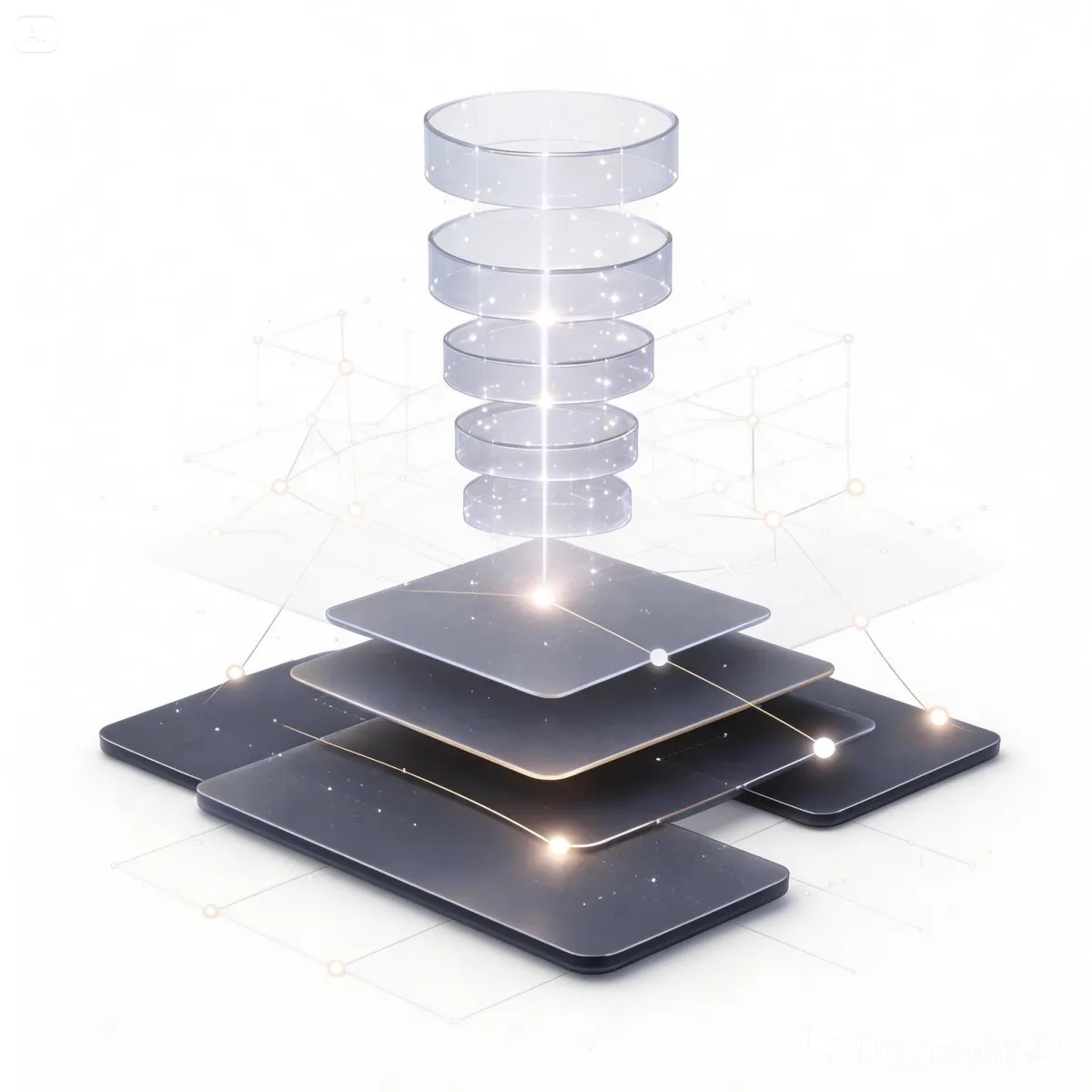
Most companies say they have a funnel. What they actually have is a collection of tools. A CRM here. An email platform there. A landing page builder. A scheduling tool. An analytics dashboard. Each piece was purchased to solve a specific problem. Together, they create the appearance of a system without delivering the function of one.
The difference between tools and infrastructure explains why some revenue operations feel calm while others feel chaotic. Tools require constant intervention. Infrastructure runs without it. Tools create visibility. Infrastructure creates predictability. Tools help you do work. Infrastructure does work for you.
This article outlines what real revenue infrastructure looks like when it's built to operate without constant founder intervention, and why the distinction matters for any company trying to scale beyond the ceiling of manual effort.
The Tool Collection Problem
Tool collections accumulate naturally. A company starts with a basic CRM to track contacts. Then adds an email platform to send campaigns. Then adds a landing page builder to capture leads. Then adds a scheduling tool to book calls. Then adds analytics to measure results. Each addition solves a real problem. The collection grows.
The issue isn't the tools themselves. It's that tools don't talk to each other in ways that create autonomous function. Data lives in silos. A lead captured on a landing page requires manual entry into the CRM. An email sequence requires manual triggering based on behavior observed in a different system. A booked call requires manual follow-up because the scheduling tool doesn't know what the CRM knows about the prospect.
This fragmentation creates dependency on humans to be the integration layer. Someone has to move data between systems. Someone has to decide what happens next for each lead. Someone has to monitor dashboards and trigger appropriate responses. The tools provide capability. They don't provide continuity. The result is a system that only works when someone is actively working it.
Why Tool Collections Feel Busy but Fragile
Tool collections create a specific feeling in organizations: constant busyness paired with persistent fragility. The team is always doing something, always responding to something, always managing something. But nothing feels stable. If someone gets sick, processes break. If someone leaves, institutional knowledge disappears. If attention shifts to a new priority, existing motions decay.
This fragility comes from the absence of encoded logic. In a tool collection, the logic lives in people's heads: who to follow up with, when to send what email, how to handle which objection, what sequence should trigger after which behavior. When the person who holds the logic is unavailable, the logic becomes unavailable. The tools sit there, capable but inert, waiting for human direction that isn't coming.
What Infrastructure Actually Means
Infrastructure is different from tools because infrastructure encodes logic. It doesn't just provide capability. It provides decision-making. When a lead takes an action, infrastructure knows what should happen next without human intervention. When a prospect exhibits a behavior, infrastructure responds appropriately. When a buyer reaches a threshold, infrastructure advances them automatically.
The defining characteristic of infrastructure is that it runs without constant attention. Not because it's automated, though automation is often involved. Because the logic governing what should happen has been designed into the system rather than held in someone's head. The system knows the rules. The system follows the rules. The system only requires human intervention for exceptions, not for normal operation.
This creates operational calm. Instead of scrambling to respond to every lead and every situation, the team can focus on improving the system while the system handles routine operation. Instead of feeling behind on follow-up, the system follows up automatically. Instead of wondering whether leads are being nurtured, the system nurtures them according to designed sequences. The humans work on the system. The system works on the revenue.
The Six Phases of Revenue Infrastructure
Real revenue infrastructure isn't a single system. It's a connected set of phases that cover the entire buyer lifecycle from first contact to closed deal and beyond. Each phase has specific functions, specific assets, and specific handoffs to the next phase. When all phases are built and connected, revenue becomes predictable because the entire journey is designed rather than improvised.
Phase One: Lead Generation Engine
The lead generation engine creates initial contact with potential buyers. This includes outbound systems like cold email and LinkedIn outreach, inbound systems like content and organic search, and capture mechanisms that convert visitors into known contacts. Infrastructure at this phase means the engine runs continuously without daily management: lists refresh automatically, sequences deploy based on triggers, responses route to appropriate handlers.
Phase Two: Demand Generation Engine
The demand generation engine moves leads from initial contact toward buying readiness. This includes nurture sequences that build belief over time, retargeting that maintains presence across channels, and educational content that addresses objections before they're raised. Infrastructure at this phase means leads don't go cold because someone forgot to follow up. The system nurtures automatically based on behavior and time, progressing each lead through belief stages until they're ready for sales conversation.
Phase Three: Sales Asset Stack
The sales asset stack provides proof and support materials that help buyers make decisions. This includes case studies structured for internal sharing, objection-handling content that addresses common concerns, ROI frameworks that justify investment, and implementation guides that reduce perceived risk. Infrastructure at this phase means sales reps have assets ready for every situation without creating them on the fly. The system delivers the right proof at the right time based on where the buyer is in their journey.
Phase Four: Lifecycle Conversion
The lifecycle conversion layer manages the transition from prospect to customer. This includes qualification logic that verifies readiness before booking calls, handoff sequences that prepare buyers for sales conversations, and deal progression systems that track buyer decisions rather than seller activities. Infrastructure at this phase means the handoff between marketing and sales is seamless because the system manages the transition rather than relying on manual coordination.
Phase Five: Measurement and Continuity
The measurement and continuity layer tracks what's actually happening and ensures nothing falls through cracks. This includes pipeline reporting based on buyer progression rather than seller activity, feedback loops that surface problems before they compound, and continuity checks that verify leads are moving through stages appropriately. Infrastructure at this phase means forecasting becomes reliable because the data reflects buyer reality, not CRM entries that describe what sellers did.
Phase Six: Maintenance and Iteration
The maintenance and iteration layer prevents system decay and enables continuous improvement. This includes regular audits of system performance, updates to sequences based on changing conditions, and optimization based on accumulated data. Infrastructure at this phase means the system gets better over time instead of slowly degrading. Without maintenance infrastructure, even well-built systems drift toward dysfunction as markets change and assumptions become outdated.
How Phases Connect
The power of infrastructure comes from connection between phases. A lead generated in Phase One automatically enters nurture in Phase Two. A prospect who crosses a belief threshold in Phase Two automatically receives sales assets from Phase Three. A buyer who books a call triggers handoff sequences in Phase Four. Every transition is designed rather than dependent on someone remembering to do something.
These connections are where tool collections typically fail. Each tool might work well in isolation, but the handoffs between tools require human intervention. A lead sits in one system while someone manually moves them to another. A prospect shows buying signals that no one notices because the data lives in a different dashboard. An opportunity stalls because the asset that would have helped was never delivered.
Infrastructure eliminates these gaps by making connections explicit and automatic. The system knows what should happen at each transition and executes without prompting. Leads don't get lost between phases. Signals don't go unnoticed. Assets get delivered when they're relevant. The buyer experiences a coherent journey even though they're interacting with multiple systems behind the scenes.
The Test of Real Infrastructure
There's a simple test for whether you have infrastructure or just tools: what happens when the founder goes on vacation? In a tool collection, things slow down or stop. Leads don't get followed up. Sequences don't get triggered. Decisions don't get made. The founder returns to a backlog of work that accumulated in their absence.
In real infrastructure, the system continues operating. Leads still get nurtured. Sequences still progress. Qualified buyers still reach sales conversations. The founder returns to a system that ran without them, possibly even generating revenue while they were away. This is the practical difference between tools and infrastructure: one requires constant presence, the other requires occasional attention.
The same test applies to staff turnover. When a key person leaves a tool collection, their knowledge leaves with them. The next person has to figure out how everything works, often by trial and error. When a key person leaves real infrastructure, the system documentation and encoded logic remain. The next person can operate the system immediately and improve it over time.
Building Your Infrastructure
Moving from tools to infrastructure doesn't happen overnight, but it doesn't have to happen all at once either. The transition can be phased, starting with the areas causing the most pain and expanding from there. The key is shifting from acquiring more tools to designing the connections and logic that make existing tools work together automatically.
We've assembled the core frameworks and templates needed to build each phase of revenue infrastructure. These include lead generation cadence blueprints, nurture sequence frameworks, sales asset templates, qualification scripts, measurement dashboards, and maintenance checklists. All of these resources are available in our infrastructure toolkit at flamefunnels.com/salesassetbuilder.
The goal isn't to add more tools. The goal is to install infrastructure that runs without constant intervention, survives staff changes, and compounds in effectiveness over time. That's what separates companies that feel perpetually behind from companies that feel calm even while growing. Not better tools. Better architecture.
From Chaos to Calm
The shift from tools to infrastructure changes how revenue operations feel. Instead of constant firefighting, there's systematic improvement. Instead of hoping leads don't fall through cracks, there's confidence that the system catches everything. Instead of dreading vacations because work will pile up, there's freedom because the system runs independently.
This is what real revenue infrastructure looks like: a connected system of phases that covers the entire buyer journey, encodes logic rather than relying on human memory, and operates continuously without constant intervention. Most companies don't have this. They have tool collections that create the appearance of systems without the function. The difference explains why growth feels hard for some companies and automatic for others. Not different effort. Different architecture.
What This Looks Like in Practice
When we rebuilt the revenue system for a B2B consulting firm that had accumulated seven different tools over three years, the diagnosis was familiar. They had a CRM, an email platform, a landing page builder, a scheduling tool, a proposal system, an analytics dashboard, and a project management tool. Each solved a specific problem. None talked to each other meaningfully. The founder spent hours each week being the integration layer, moving data between systems and triggering sequences manually.
The fix wasn't adding more tools or replacing existing ones. The fix was designing the connections and logic that made the existing tools work together. We mapped the buyer journey across all six phases, identified every handoff point, and built automation that handled transitions without human intervention. Leads captured on landing pages automatically entered appropriate nurture sequences. Prospects showing buying signals automatically received relevant case studies. Qualified buyers automatically triggered calendar availability with pre-call sequences.
Within sixty days, the founder's weekly 'system management' time dropped from twelve hours to two. Revenue didn't just maintain, it increased by over 40% because leads that previously fell through cracks now progressed through designed journeys. The tools were the same. The architecture was different. That's the transformation from tool collection to infrastructure.

Case Studies
Contact
85 Great Portland Street, London, W1W 7LT
The methodology for predictable B2B revenue.
© 2026 B2B Growth Systems. All rights reserved.